Newsrael
The F-22 Super Raptor makes a major comeback
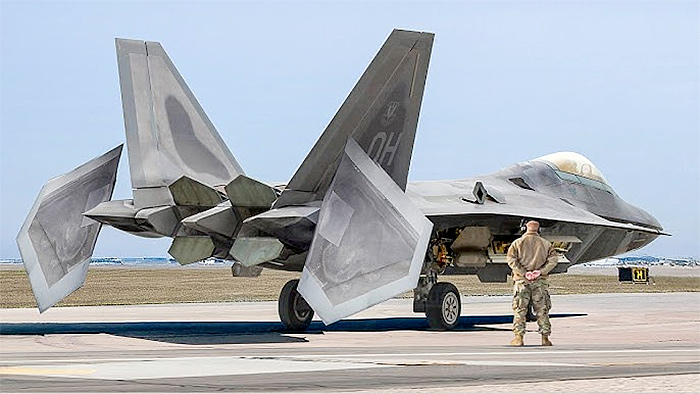
Now, with the uncertain future of the sixth-generation NGAD program and the rapid military buildup of Russia and China, the US intends to keep upgraded F-22s flying well into the 2060s and beyond. Continuous upgrades to software, sensors, weapons, and data links keep the Raptor ahead of global adversaries, but its small fleet size remains its biggest weakness. The F-22 is still the world’s top “first-shot, first-kill” air-dominance fighter. Many experts argue the US made a strategic mistake by not building a much larger fleet. What makes the F-22 so dominant? Its round thrust-vectoring exhaust nozzles give it the world’s best thrust-to-weight ratio—1.37—allowing unmatched acceleration and maneuverability. Russia’s upgraded Su-35 is the closest competitor, but falls far behind in sensors, stealth, and weapons. The Raptor’s advanced radar and IRST (infrared search and track) systems allow it to maintain target lock even in harsh electronic-warfare environments. The F-22 has already proven itself in combat, debuting against ISIS in 2014, and remains a rapid-response asset that can deploy worldwide within 24 hours during crises. Decades of upgrades have made it more lethal with improved avionics, stealth coatings, communications, and enhanced missile systems such as the AIM-9X and AIM-120D. The jet now shares two-way data with fourth-generation fighters and the F-35. Why wasn’t production restarted? Political timing, the belief that Russia was no longer a serious threat, and years of counter-terror warfare drew Washington’s attention away from the importance of air dominance. Decision-makers assumed a sixth-generation fighter would replace the F-22 quickly—an assumption that now appears premature. A major lesson has emerged: airframes can remain effective for decades when paired with modern weapons, avionics, and sensors. Just as the B-52 and F-16 have been transformed through modernization, the F-22 will continue evolving—including future capability to control drone “loyal wingmen.” The Air Force now acknowledges it needs more F-22-level capability to dominate in any future great-power conflict.
See this content immediately after install